
SPN-10 · self-cleaning nano coating
One nano coating. 4–15% more energy.
SPN-10 is a spray-applied self-cleaning nano coating for the front glass of PV modules. Applied to a clean panel, it restructures the surface so rainfall sheets away, carrying dust and stains off with it instead of drying them in. It does not touch the electrical system.
+2.2% single-side transmittance. 67% anti-soiling efficiency observed across 36 deployed sites. Typical reported 1–1.5 year payback over a 5-year coating life. The estimator below turns your site's soiling and curtailment into a first-pass number.
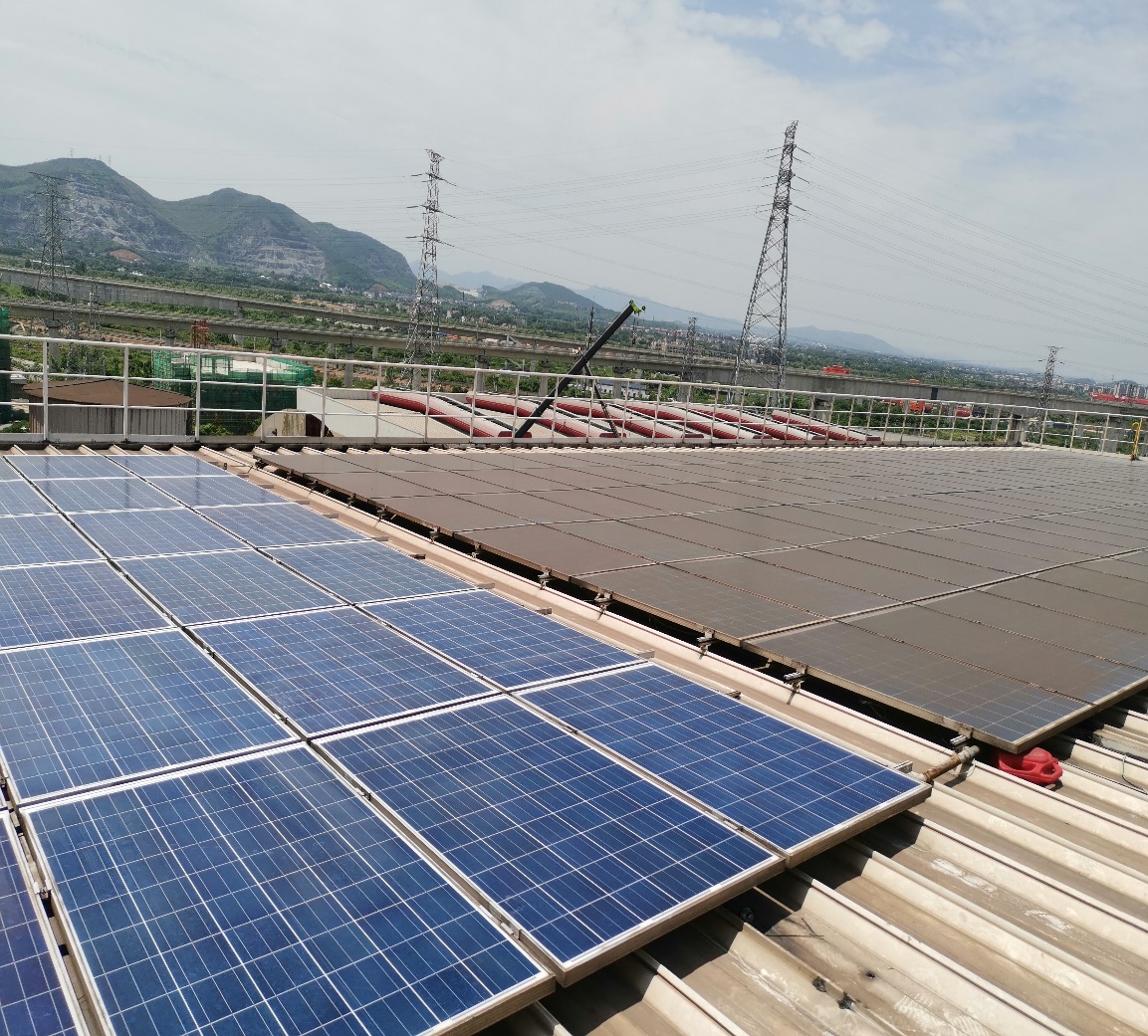
Measured values, per manufacturer test reports
+2.2%
Transmittance,
PV glass · SPN-10, single-side
< 5°
Water contact angle,
superhydrophilic surface
4H
Pencil hardness
on cured coating
2000
EN-1096 abrasion cycles
at 500 g, no damage
36 sites
~ 180 MW deployed
across 2021–2026
Loss mechanisms %/yr
Two losses SPN-10 can reduce without re-racking.
-
Soiling
− 3 to − 20%
Dust and staining on the front glass
The soiling penalty varies widely by environment, from a few percent in wet-humid regions to well over ten percent in desert and industrial dust. SPN-10's superhydrophilic surface lets rainfall carry contaminants off the glass instead of drying them into it — a 67% anti-soiling efficiency across deployed sites.
-
Front-surface reflection
≈ 8% loss
Light that never enters the glass
Un-coated PV cover glass reflects roughly 8% of the incident light. SPN-10's porous active layer flattens the refractive-index step at the air/glass boundary and recovers a reported 2.2% of that.
Site-specific gain depends on module type, tilt, rainfall pattern, dust chemistry and cleaning schedule. The figures on this page are the manufacturer's own laboratory and reference values, and should be confirmed against your site before use in a yield model.
Estimate %/yr
Estimate your uplift from two numbers.
Photon Planet's field data across 36 sites gives a simple closed-form estimator for annual energy uplift — typically 4–15% per year, with an reported payback of 1–1.5 years against a 5-year coating life. The two figures a site owner already knows — average annual soiling loss, and any curtailment fraction — are enough for a first pass.
For a site with % soiling and % curtailment, the expected annual uplift is:
- Estimated annual energy uplift
- 6.8%
2.2% is the measured single-side transmittance gain — the
coating's own contribution, before any soiling savings are counted.
Formula: uplift % = (2.2% + soiling % × 67%) × (1 − curtailment %).
The 67% is the anti-soiling efficiency observed across deployed sites. Curtailment
discounts the uplift because panels the grid tells to switch off cannot deliver
extra energy.
-
Light soiling < 5%
~ 3–5% uplift
-
Medium 5–10%
~ 5–10% uplift
-
Heavy > 10%
~ 10–15% uplift
Bands are the observed uplift range across Photon Planet's 36 deployed sites, grouped by the site's baseline soiling loss. Heavier soiling gives more room to recover, which is why the uplift band widens with soil.
Self-cleaning SPN-10
Rain does the cleaning, if the surface lets it.
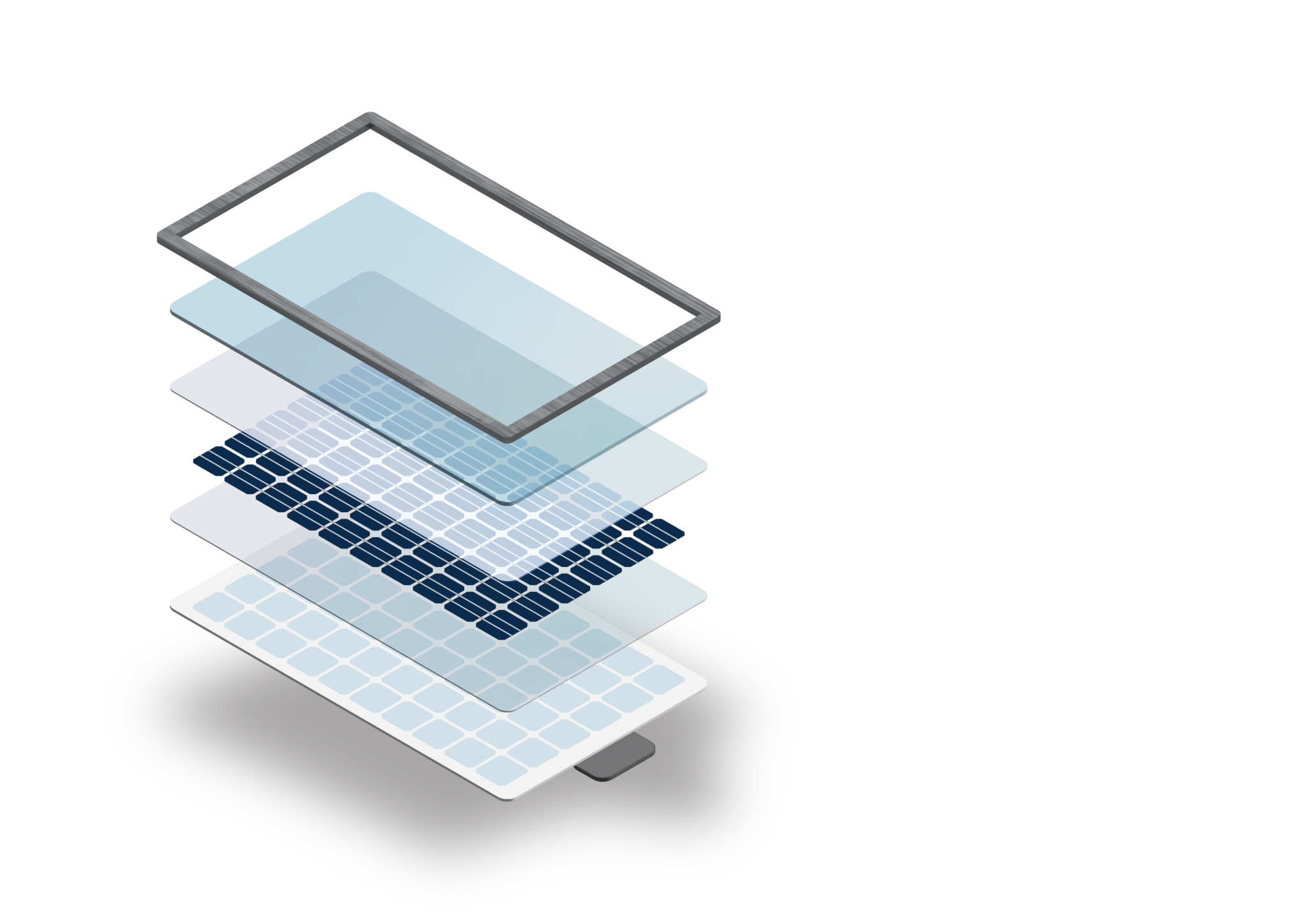
Untreated PV glass is smooth and mildly hydrophobic. Water beads, then evaporates in place, leaving the contaminants it carried behind as a stain. SPN-10 restructures the surface at the nano scale so it becomes superhydrophilic: water spreads to a thin sheet and slides off, taking the dust with it.
Reported mechanism
- Active-surface hydroxyl chemistry
- Nano-scale roughness (increased wetting)
- Photo-catalytic activity under UV
- Anti-static (surface resistance 10¹⁰–10¹¹ Ω)
- Dense barrier against Na⁺ and Ca²⁺ migration from the glass
Durability testing SPN-10
The block a specifier wants to see.
The following results are from the SPN-10 self-cleaning coating's published test report. Full test certificates are available on request as part of the datasheet pack.
| Test | Condition | Result |
|---|---|---|
| Transmittance change | Damp heat, 1,000 h | ΔT < 1% |
| Transmittance change | PCT, 48 h | ΔT < 1% |
| Transmittance change | Humidity freeze, 20 cycles | ΔT < 1% |
| Transmittance change | Thermal cycling, 400 cycles | ΔT < 1% |
| Transmittance change | UV radiation, 120 kWh | ΔT < 1% |
| Transmittance change | Salt fog, 96 h | ΔT < 1% |
| Abrasion | EN-1096, 500 g load × 2,000 cycles | No damage |
| Chemical | 5% HCl, 24 h | Pass |
Download the Safety Data Sheet SPN-10 / SPN-13 · GHS 7 · PDF, 3 pages · PFAS-free composition disclosed
Backing
Chemistry that has passed the tests specifiers ask for.
SPN-10 is formulated by a specialist coatings manufacturer with a broad invention-patent portfolio in superhydrophilic nano chemistry. The coating is production-mature, in daily use across utility-scale PV, distributed rooftop and agri-PV sites.
SPN-10 is supplied and supported from Sydney by Photon Planet, with local technical liaison for specification, on-site trial and after-sales support.
How we start two shapes
A block trial, or a site-wide performance model.
Two starting shapes, both designed to reduce upfront capital risk for the site owner. Most utility-scale deals start with the block trial and roll onto the site-wide model once the SCADA comparison holds.
-
Free block trial
1–10 MW
One central-inverter block, at no cost
Photon Planet applies SPN-10 to a single central-inverter block. The adjacent block, cleaned only, is the SCADA reference. A full seasonal cycle removes soiling noise from the comparison; three months of data can support an initial decision on whether to scale up.
-
Nothing-upfront, site-wide
5 yr recovery
70/30 revenue split on the measured uplift
Photon Planet funds the coating across the whole site and recovers the investment from the measured monthly SCADA uplift. Split is 30% to the asset owner, 70% to Photon Planet, over five years. After year five the asset owner keeps 100% of any remaining uplift — the coating warranty is five years, so the two windows line up.
Both shapes assume the coating and cleaning happen in the same visit, so a trial block is one operational day rather than two. See cleaning services for the field logistics.
Enquiry Sydney time
Tell us about the site.
Send the location, capacity, module type and your current soiling profile — and we will come back with the SPN-10 datasheet, the SDS, and an indicative price against your inverter layout.